
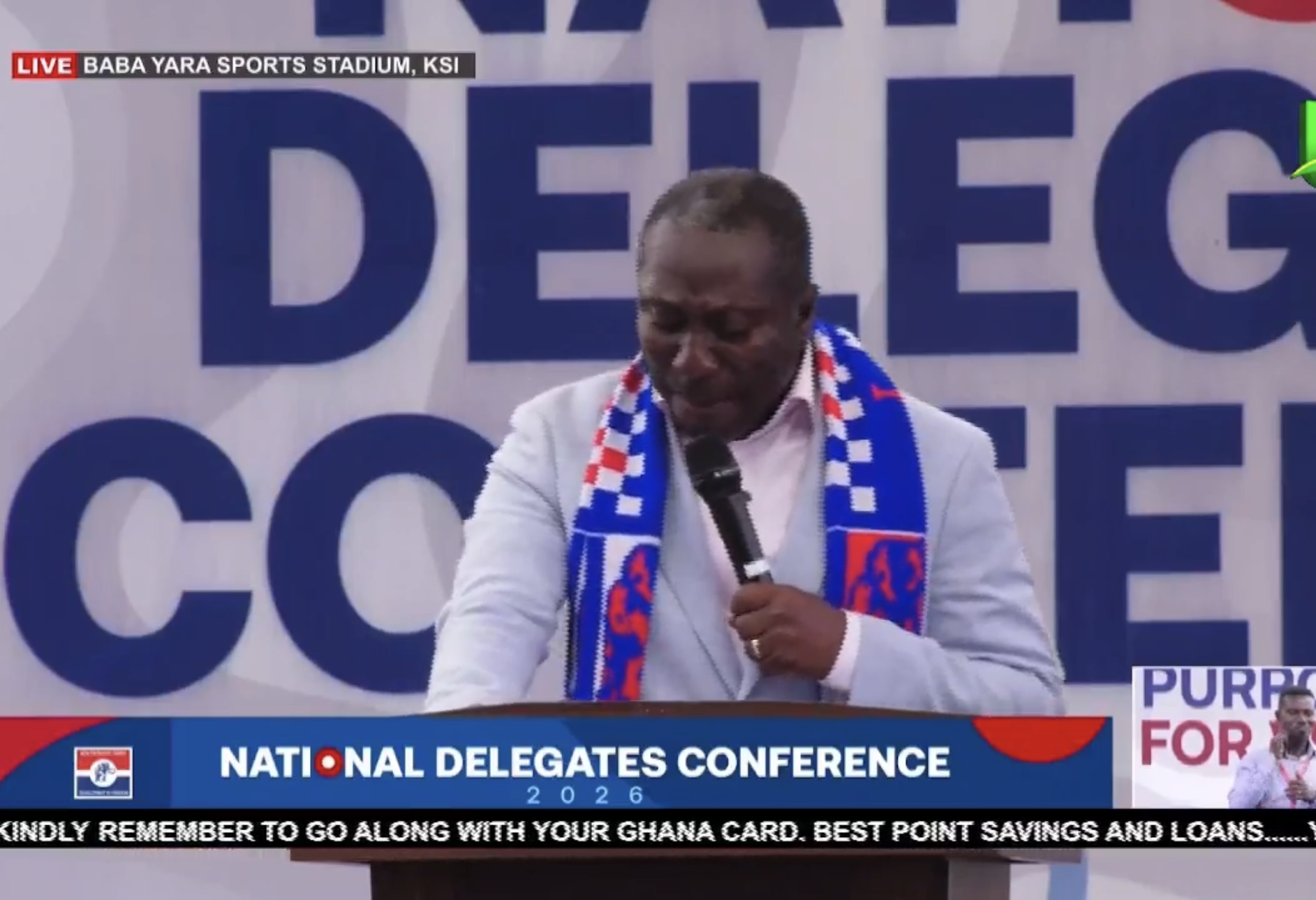
Kwaku Azar has weighed in on the growing controversy over OSP

Kwaku Azar Write
Legal scholar Kwaku Azar has weighed in on the growing controversy surrounding the Office of the Special Prosecutor (OSP), raising serious questions about the government’s response to a recent High Court ruling. At the center of the debate is a position reportedly echoed by the Deputy Attorney General, that the High Court has directed the OSP to obtain express authorization from the Attorney General of Ghana before continuing prosecutions. According to this view, until such authorization is granted, the Attorney General’s office may take over ongoing cases. But Kwaku Azar challenges this logic directly.
FIRST ARGUMENT: IF AUTHORIZATION IS THE ISSUE, THEN JUST ISSUE IT
Azar begins with a simple assumption, for the sake of argument, that the High Court is correct. Even under that assumption, he says, the government’s current posture makes little sense. If the only problem is a lack of authorization, then the solution is straightforward:
Issue the authorization.
He argues that the law cannot reasonably be interpreted in a way that allows a correctable administrative gap to cripple an entire institution. A defect that can be cured should be cured—not used as a basis to sideline the institution altogether. In his words, this situation calls for a “creative response, not institutional displacement.”
SECOND ARGUMENT: A CONTRADICTION IN LOGIC
Azar then exposes what he sees as a deeper inconsistency. If the prosecutions initiated by the OSP are considered flawed because they lacked authorization, then a key question arises: On what legal basis can the Attorney General now take over and continue those same prosecutions? If they were invalid to begin with, how do they suddenly become valid under a different office? This, he suggests, creates a contradiction that has not been properly explained.
THE BIGGER QUESTION
Critics are now asking: If the Office of the Special Prosecutor has been operating for years—since the era of Nana Addo Dankwa Akufo-Addo—investigating and prosecuting high-profile cases, including those involving government officials… Why is the issue of authorization only becoming a problem now? And more importantly: If authorization is truly required and the Attorney General has the power to grant it, why not simply do so?
FINAL POINT
At its core, this is not just a legal technicality. It is about institutional integrity. Because the longer the issue remains unresolved, the more it raises concerns about:
- consistency in legal interpretation
- independence of anti-corruption bodies
- and the broader commitment to accountability
And the simplest solution, at least on the surface, remains the one Kwaku Azar highlights:
If authorization is the missing piece, then provide it—and let the law work.

It’s appropriate time to make some plans for the long run and it’s time to be happy. I have read this put up and if I may just I desire to suggest you some attention-grabbing things or tips. Maybe you can write next articles referring to this article. I desire to read more things about it!