Israeli Ambassador to France Criticizes UN Security Council
Israeli Ambassador to France on UN Security Council: ‘Indispensable’ Despite Divisions, Peace Leadership Candidate Says
A leading candidate in global peace and security governance has defended the central role of the United Nations Security Council, insisting the body remains essential despite political divisions and frequent deadlocks.
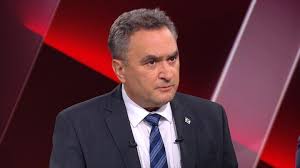
Speaking on France24 Television on Tete a Tete, the Israeli Ambassador to France, Joshua Zarka, said he welcomes all efforts aimed at promoting global stability but stressed that the United Nations must remain the primary platform for resolving conflicts. “I don’t have a problem with any initiative,” he said. “But let’s put our act together at the UN. Let’s make the Security Council work.”
Security Council Still ‘Absolutely Indispensable’
Acknowledging criticism that the Council has struggled to deliver concrete outcomes in recent years, particularly due to vetoes by permanent members, he argued that its value should not be measured solely by the number of resolutions adopted. “It would be perfect if resolutions were consistently passed,” he noted. “But the Security Council is the place where countries discuss war and peace. Whether they come to agreements is another matter.”
He emphasized that the Council remains the key venue where the UN Secretary-General can engage global leaders and attempt to broker diplomatic solutions. Looking back at history, he referenced the period following the fall of the Berlin Wall, when cooperation briefly improved, and vetoes declined. However, he said geopolitical rivalries eventually resurfaced and are unlikely to disappear. “Underlying political differences will continue to exist,” he said. “That is precisely why we still need a body where those differences can be discussed and, from time to time, resolved.”
Argentina’s Nomination and Questions Over Independence
The ambassador’s remarks also come amid attention over his nomination by Argentina to join a global peace leadership body. Under UN procedures, individuals do not nominate themselves; they are put forward by their home countries. Although he has served as an international civil servant for several years, he remains an Argentine national, and his candidacy was backed by President Javier Milei.
Milei has been outspoken in his criticism of the United Nations, previously describing it as a “supranational” system run by bureaucrats who attempt to impose a particular way of life on nations. During a recent visit to New York, the candidate said he was asked whether he would reflect the political views of his country’s president if appointed.
Mr. Zarka firmly rejected that notion. “Argentine foreign policy is for Argentina,” he stated. “I am not the Argentine foreign minister. I am not an Argentine official.” He stressed that international civil servants serve under the UN Charter and operate independently of national governments.
A Broader Debate on Multilateralism
The exchange highlights growing global debate over the effectiveness of multilateral institutions, particularly at a time of heightened geopolitical tension. While critics argue that divisions within the Security Council have weakened its authority, supporters maintain that it remains the only internationally recognized body empowered to address threats to peace and security. Despite internal challenges, the ambassador concluded that abandoning the Council is not the answer. “We will always need a place to discuss war and peace,” he said. “And that place remains the United Nations.”