Hassan Ayariga Says “Talk Is Cheap” as He Calls for Price Control Measures on Ghana’s 69th Independence Day
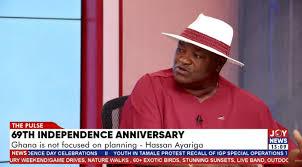
Hassan Ayariga Says “Talk Is Cheap” as He Calls for Price Control Measures on Ghana’s 69th Independence Day
The presidential candidate Hassan Ayariga has criticized the rising cost of goods and services in Ghana, saying speeches alone will not solve the economic difficulties facing citizens. Speaking on the country’s Ghana Independence Day, the leader of the All People’s Congress (APC) said, “Talk is cheap,” urging the government to introduce practical policies that directly reduce the cost of living.
Call for National Price Control System
According to Ayariga, even though the Ghanaian cedi has shown signs of appreciation against the US dollar, prices of goods and services in markets across the country remain high. He argued that the government must introduce a National Price Control Guarantee System, a policy proposal he says is included in his manifesto. Under this system, the government would regulate the prices of certain goods and services to prevent excessive price increases by traders.
“There is an argument that Ghana practices a free market economy and that the government should not be heavily involved in price regulation,” he said. “But a free market economy does not mean prices should increase astronomically.” He further explained that since citizens pay taxes on commodities, the government should ensure transparency in how prices are determined, including the tax components attached to those goods.
Proposal for 50% Independence Day Price Reduction
The APC presidential candidate also suggested that goods and services should be sold at half price during Independence Day celebrations to allow citizens to feel the real benefits of independence. According to him, a 50 percent reduction in prices on the national holiday would encourage economic activity and make the celebration meaningful for ordinary Ghanaians. “If goods are sold at half price on Independence Day, markets will be full, businesses will be active, and people will truly feel the impact of the celebration,” he stated. He believes such a policy would stimulate spending, benefit businesses, and contribute to economic growth.
Concern Over Heavy Imports
Ayariga also expressed concern about Ghana’s dependence on imported goods, noting that many essential commodities sold in local markets are sourced from abroad. He cited examples such as rice and cooking oil, which are often imported from countries like Thailand. According to him, Ghana must prioritize local production of food and essential goods to reduce import dependence and strengthen the national economy.