
SpaceX Crew-12 Launches Successfully to International Space Station
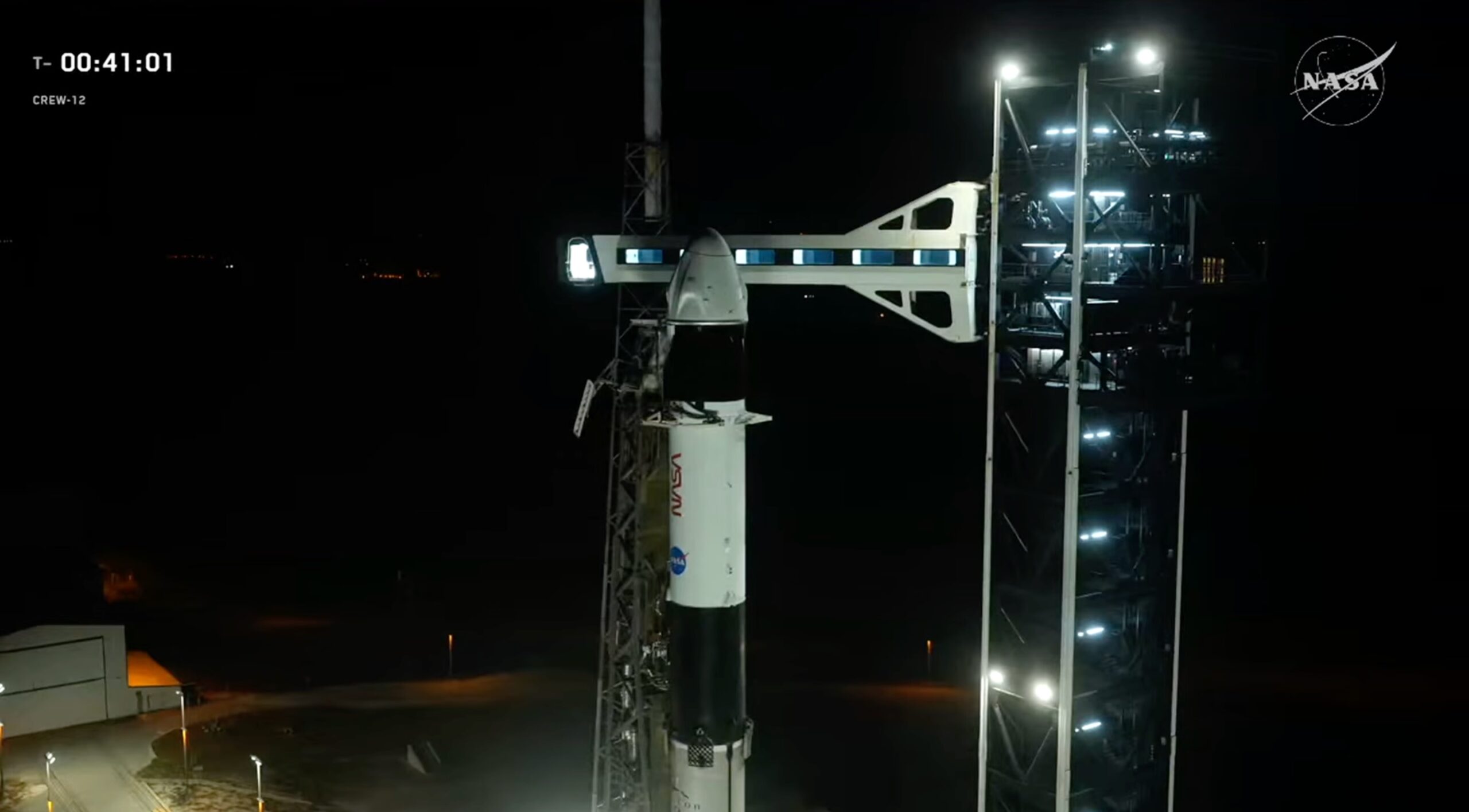
A SpaceX Dragon spacecraft carrying Crew-12 has successfully launched into orbit en route to the International Space Station (ISS), marking another milestone in commercial spaceflight.
The launch took place from Cape Canaveral, with mission control confirming a “nominal orbit insertion” following second-stage engine cutoff. Engineers allowed a brief coast phase to stabilize the rocket before Dragon separated and began its journey toward the ISS.
The Falcon 9 rocket—a 25-story vehicle powered by nine engines—burned through approximately 700,000 gallons of fuel per second during liftoff. In another display of SpaceX’s reusable rocket technology, the first-stage booster completed a successful landing shortly after launch.
This mission marks the 12th long-duration crewed flight to the ISS conducted by SpaceX.
As the rocket soared into orbit, hundreds gathered at the Cité des Sciences et de l’Industrie in northern Paris to witness the event live.
The atmosphere was focused and intense rather than celebratory. Students, teachers, and space enthusiasts watched the countdown in near silence before applauding the successful liftoff.
Many young attendees expressed inspiration, particularly from French astronaut Sophie Adenot, who is part of the Crew-12 mission. Adenot follows in the footsteps of Claudie Haigneré, the first French woman to travel to space in the 1990s.
One university student studying science described the mission as motivation to pursue her dream of becoming an astronaut. Others said they were fascinated by space exploration, even if they preferred to remain “with both feet on the ground.”
Several schools attended the launch viewing as part of educational projects that will track the Crew-12 mission throughout the year. One class plans to conduct plant growth experiments alongside research being carried out aboard the ISS.
A New Era of Reusable Rockets
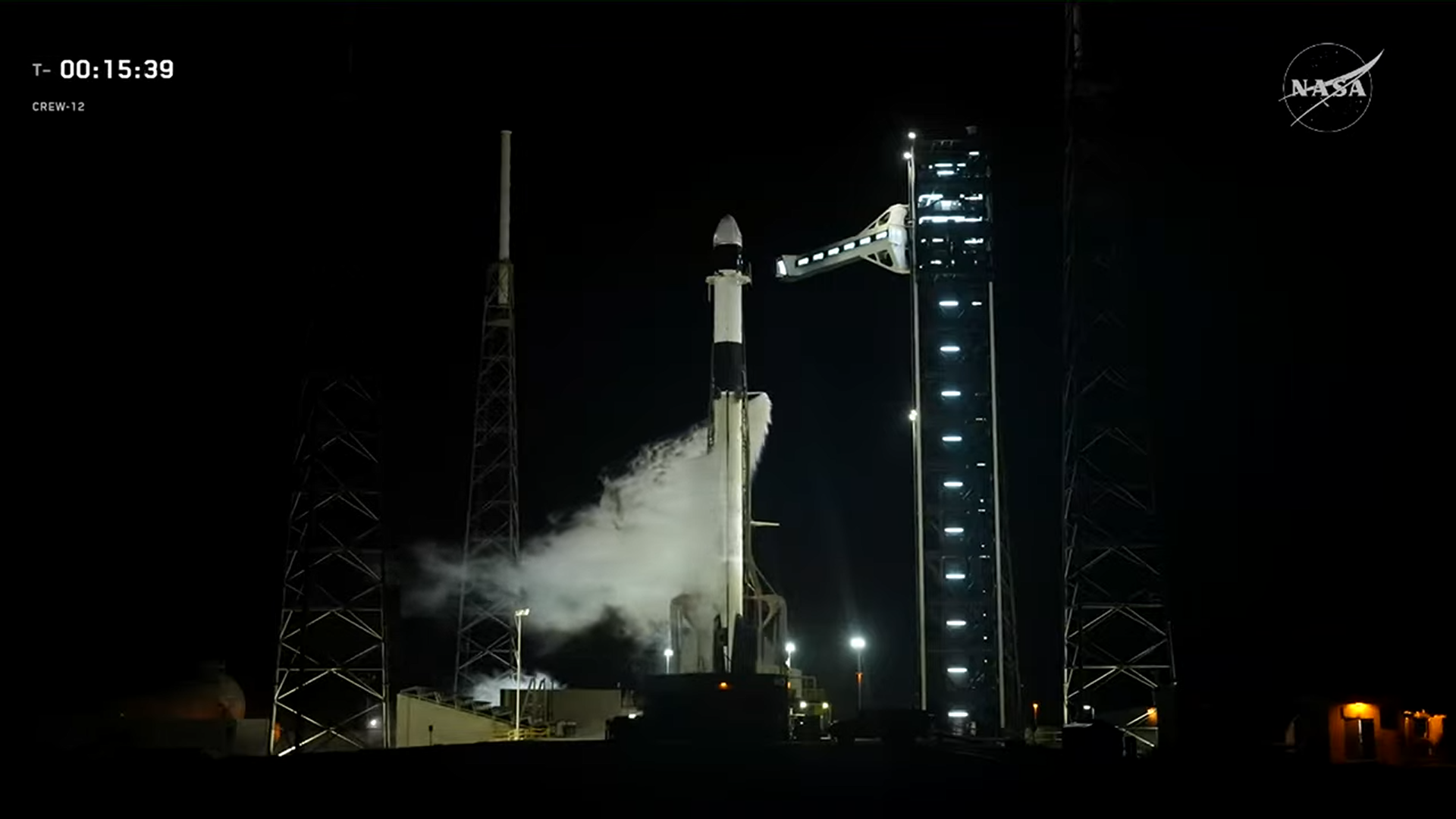
Experts say the success of reusable rockets has transformed space travel.
Unlike earlier NASA missions in the 1960s and 70s—and even the Space Shuttle program, which required months between launches—Falcon 9 boosters can be refurbished and relaunched within days. This rapid turnaround significantly reduces costs and increases launch frequency.
Much of the innovation is credited to Elon Musk, whose vision for reusable launch systems has reshaped the commercial space industry.
International Cooperation in Orbit
Crew-12 includes astronauts from multiple countries, reflecting ongoing international collaboration in space exploration. Alongside American crew members, the mission also includes a Russian cosmonaut and France’s Sophie Adenot.
Their responsibilities aboard the ISS will include station maintenance, scientific experiments, and rigorous daily exercise routines necessary to counteract the effects of microgravity.
Concerns Over Science Funding
While the launch represents technological success, experts note concerns about the broader landscape of science funding, particularly in the United States. Recent funding reductions have led some researchers to seek opportunities abroad in Europe.
Despite these concerns, missions like Crew-12 highlight the continued global commitment to space exploration and international scientific cooperation.