
U.S. Rejects NATO; Defense Secretary Summit in Brussels
U.S. Signals Shift in NATO Role as Defense Secretary Skips Summit in Brussels
Brussels—The United States has sent a strong signal about its changing role within NATO after its defense secretary declined to attend a key alliance summit, an absence that officials say is highly unusual.
According to NATO sources, no formal explanation was offered for the decision. U.S. officials did not cite scheduling conflicts or competing engagements, leading analysts to interpret the move as a deliberate message: Washington may no longer intend to lead the alliance in the way it has for decades.
Instead of the Defense Secretary, the Pentagon’s Director of Policy, Elbridge Colby, represented the United States at the meeting. During discussions with fellow defense ministers, Colby emphasized that Washington wants NATO to function as a “partnership rather than a dependency.”
A Historic Absence
European officials publicly downplayed the absence, suggesting it was not extraordinary. However, historically, it has been almost unheard of for a U.S. Defense Secretary to miss a NATO defense ministers’ summit.
For decades, American leadership has been central to the alliance’s operations, strategy, and command structure. The absence is widely seen as symbolic of a broader strategic shift under the Trump administration.
Potential Structural Changes
Beyond the summit snub, the U.S. has reportedly floated several proposals that would significantly reshape NATO’s command structure:
- Appointing a European as Supreme Allied Commander Europe (SACEUR) — a position traditionally held by an American general.
- Transferring control of two major NATO command posts — in Naples and Norfolk — to European leadership.
If implemented, these changes would represent one of the most significant adjustments in NATO’s balance of leadership since its founding in 1949.
Europe’s Readiness in Question
While Washington appears eager to redefine NATO as a more equal partnership, some analysts argue that European allies are not yet fully prepared to assume expanded leadership and defense responsibilities.
The U.S. has long been NATO’s dominant military and financial contributor. A reduction in American leadership would require European nations to increase defense spending, coordination, and operational readiness.
A Clear Message
Taken together—the summit absence, proposed command restructuring, and rhetoric about partnership—the signals from Washington are unmistakable.
The United States appears to be recalibrating its role within NATO, stepping back from traditional leadership and pushing Europe to take greater responsibility for its own defense.
Whether this marks a temporary adjustment or a lasting transformation of the transatlantic alliance remains to be seen.
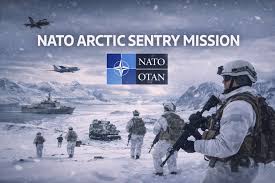
NATO Launches “Arctic Century” Mission to Boost Security in High North
Brussels—NATO has announced the launch of a new Arctic-focused security initiative, dubbed “Arctic Century,” as the alliance seeks to strengthen its presence in the High North amid growing geopolitical tensions.
The announcement came during a meeting of NATO defense ministers in Brussels on Thursday, where officials emphasized the need to take emerging Arctic security challenges more seriously.
“This is why we have launched Arctic Century,” a NATO official said, citing Russia’s increased military activity in the region and China’s expanding strategic interest in the High North.
Increased Allied Presence
As part of the mission, Sweden has confirmed it will deploy fighter jets to patrol airspace around Iceland and Greenland. France, Germany, Denmark, and the United Kingdom have also pledged participation.
British officials stated that the UK would play a central role in the operation, reinforcing NATO’s collective security posture in the Arctic.
The initiative is designed to improve coordination, surveillance, and readiness among allied forces operating in the region.
Rebranding or Strategic Shift?
While NATO frames Arctic Century as a critical security step, some analysts argue the move may initially amount to a rebranding of existing military exercises already underway in the High North.
National drills conducted by countries such as Denmark and Norway are expected to be incorporated under NATO’s joint command structure, headquartered in Virginia. Critics suggest that the mission consolidates ongoing activities rather than creating an entirely new operational framework.
Geopolitics and Greenland
The launch comes after a period of diplomatic strain involving the United States and Greenland—tensions that have since eased.
Observers note that European allies may also be seeking to demonstrate greater leadership within NATO, particularly amid concerns that Arctic security issues have been amplified in recent years.
Some analysts argue that the immediate security threat in the Arctic may be overstated. However, European governments appear keen to show Washington that they are taking regional defense responsibilities seriously.
By formalizing Arctic cooperation under the “Arctic Century” banner, NATO aims to reinforce unity within the alliance while addressing increased Russian military presence and China’s long-term strategic ambitions in the region.